

Carpet Padding Mold Removal
The pad soaks up water and holds it, which makes it the most common hiding place for mold.
Learn about carpet padding mold removal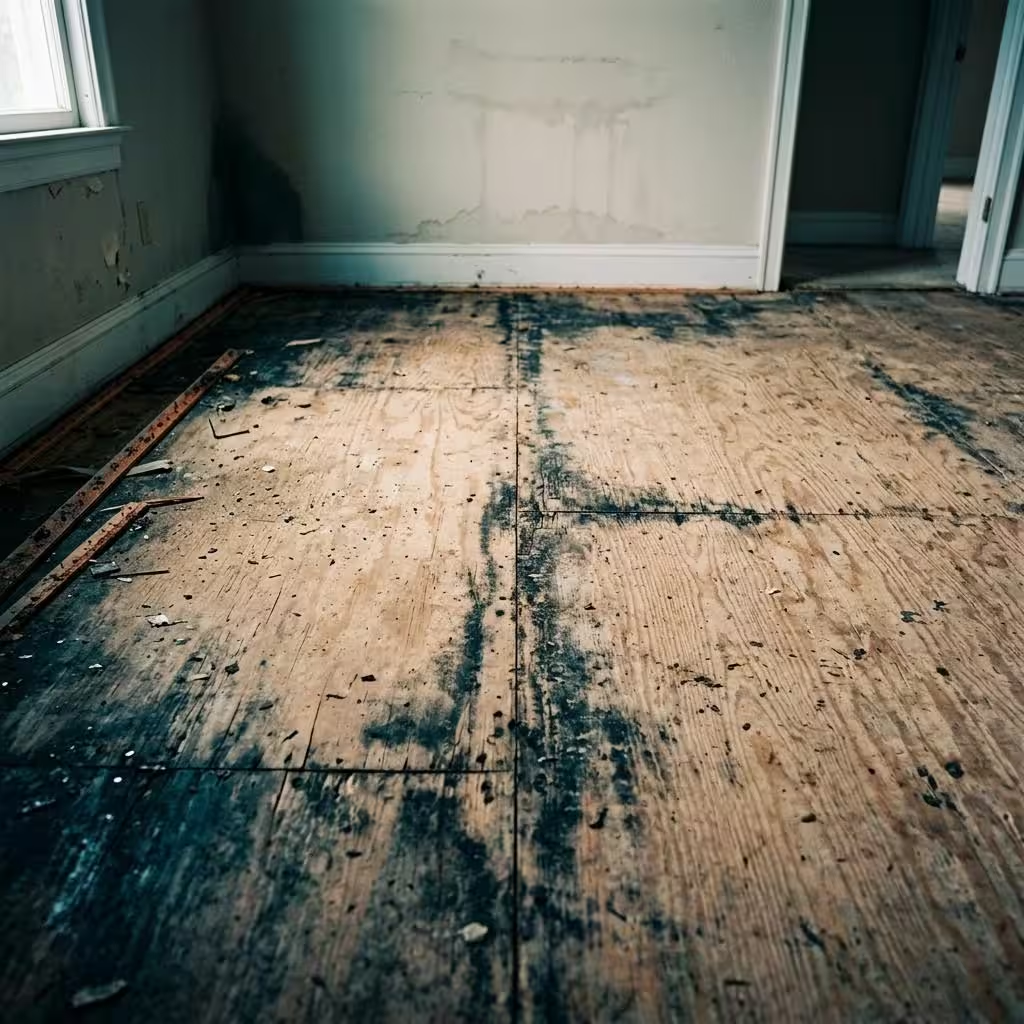
Carpet mold service
Subfloor mold treatment begins once carpet and pad are out of the way. The subfloor, whether plywood, OSB, or concrete, is where moisture often collects, and leaving it damp or stained under new carpet invites the same problem back.
Wood subfloors absorb water and can develop growth on their surface, especially along seams and edges. Concrete slabs can hold moisture and support growth on residues or debris.
The subfloor must be dry before new flooring goes down. EPA guidance emphasizes drying materials thoroughly and addressing the water source to prevent mold from returning.
Carpet, pad, and tack strip are removed in affected areas.
The subfloor is checked for moisture, staining, and structural soundness.
Surface growth is cleaned where appropriate and the subfloor is dried.
Once dry and sound, the subfloor is ready for new pad and carpet.
A subfloor that feels soft or spongy may have deeper damage and may need to be replaced rather than cleaned.
Slabs that feel dry on the surface may release moisture from below, especially in basements.
The sooner moisture is found, the less carpet has to come out. Call (855) 661 4275 and describe what you see.
Monday to Saturday, 8am to 7pm
Carpet mold situations often overlap. These services are closely connected to subfloor mold treatment, and each has its own page with details specific to that problem. You can also return to the full list of carpet mold removal services.
The pad soaks up water and holds it, which makes it the most common hiding place for mold.
Learn about carpet padding mold removal
The most common carpet mold location, where slab moisture and humidity work together.
Learn about basement carpet mold removal
A full process that pairs mold removal with moisture correction so growth does not return.
Learn about carpet mold remediation