
Moldy Carpet: When to Clean vs. Replace It (Costs + Data, 2026)
Key Takeaways
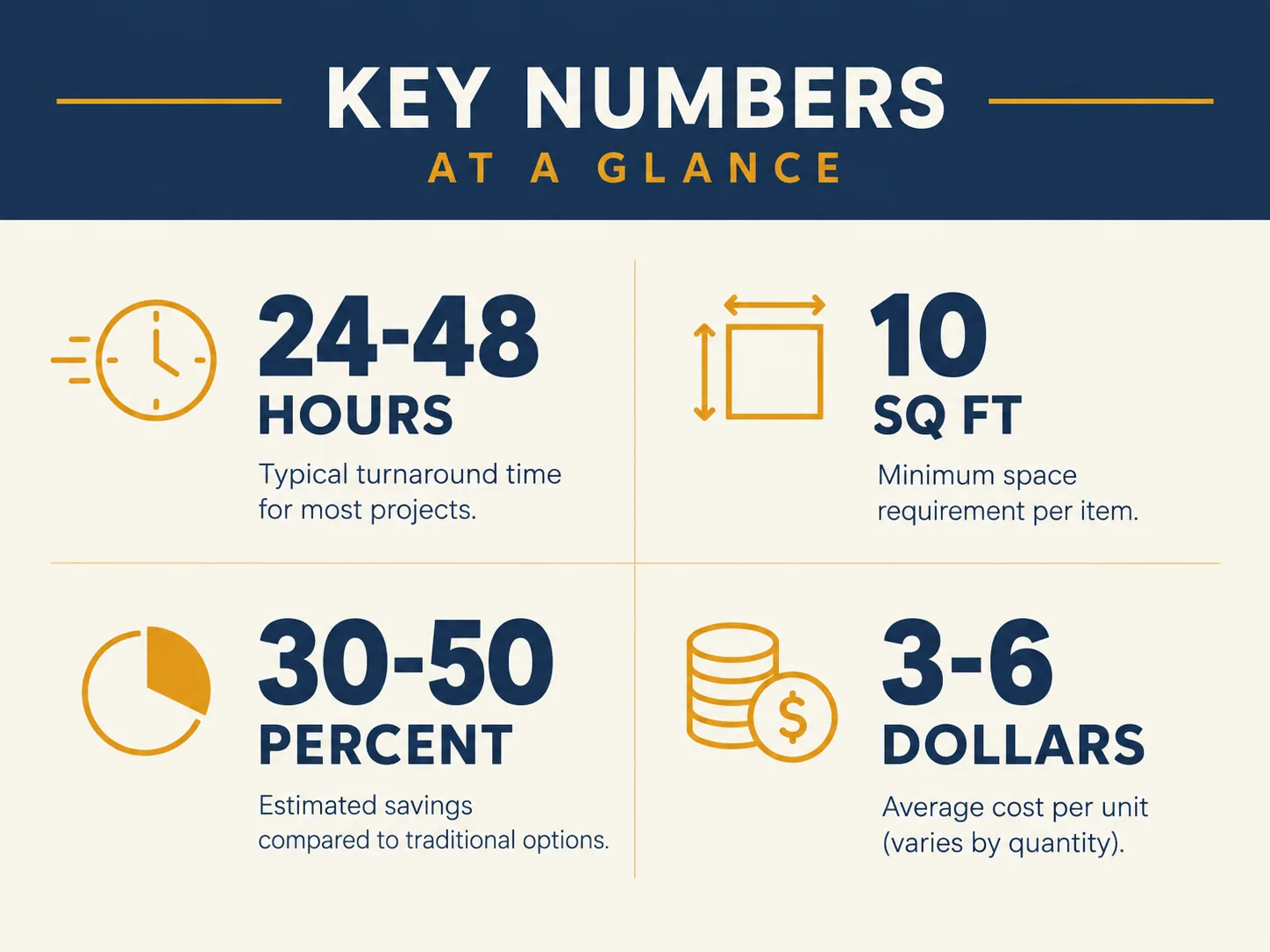
- → Dry wet carpet within 24–48 hours or mold can begin to grow (US EPA, 2026)
- → Carpet is porous — the EPA says moldy carpet may have to be thrown away because mold fills its crevices and can't be fully removed (US EPA)
- → Under 10 sq ft of mold from clean water is the EPA's rough DIY threshold; anything larger or from sewage needs a pro (US EPA)
- → Water category decides it — IICRC Category 1 (clean), 2 (gray), and 3 (sewage) drive whether carpet is restored or replaced (IICRC S500)
- → Replacing carpet costs $3–$6/sq ft installed, plus $0.50–$1.50/sq ft for padding (2026 cost aggregators)
- → Bleach won't save it — dead mold still causes allergic reactions, so mold must be physically removed (US EPA)

Moldy carpet triggers the same question every time: can I save this, or do I rip it out? The internet is full of conflicting answers — some sources say scrub it with vinegar or hydrogen peroxide, others say replace it outright. This guide settles the question with the actual rules and numbers: the EPA's drying window, the water categories that restoration pros use, and what replacement really costs per square foot in 2026.
1 The 24–48 Hour Window Is the First Decision Point
The single most important question is not what cleaner to use — it's how long the carpet stayed wet. The US EPA says water-damaged materials should be dried within 24–48 hours to prevent mold growth.
The clock matters because mold doesn't need long. Mold can begin growing within 24–48 hours of materials becoming wet — a timeline the EPA states directly and that FEMA echoes in post-disaster guidance. That's why the practical advice in what to do in the first 48 hours after a leak starts with extraction and drying, not cleaning.
This one factor also maps neatly to the clean-or-replace decision: carpet that was soaked and dried within the window has a shot at being saved. Carpet that sat wet for days — even if the surface now feels dry — has likely already grown mold in the padding and subfloor. For the step-by-step reasoning behind that call, see how the clean-or-replace decision gets made.
2 Why Carpet Is Different From Hard Surfaces
Hard surfaces can be scrubbed clean. Carpet is porous — the EPA explicitly warns that porous materials like carpet may have to be thrown away when moldy because mold fills the empty spaces and crevices and becomes difficult or impossible to remove completely.
| Surface | EPA guidance | Typical outcome |
|---|---|---|
| Hard surface (tile, metal, glass) | Scrub with detergent + water, dry completely | Cleanable |
| Porous (carpet, ceiling tile, drywall) | "May have to be thrown away if moldy" | Usually replace |
The distinction is physical, not cosmetic. Mold sends root-like structures into the fibers and backing of carpet, where no surface scrubber can reach. This is also why mold color on carpet can't tell you what you're dealing with — dark spots may be surface staining or full penetration, and color alone doesn't distinguish the two.
3 The Water Category Decides Clean vs. Replace
Restoration pros don't guess — they classify the water first. The IICRC S500 standard splits water damage into three categories, and the category is the primary driver of whether carpet is restored or replaced.
| Category | What it is | Carpet action |
|---|---|---|
| Category 1 | Clean water (supply line) | May be restorable if dried fast |
| Category 2 | Gray water (washing machine, etc.) | Usually replace |
| Category 3 | Black water (sewage, flood) | Replace + professional remediation |
The EPA draws the same line in plain language: if the water or mold damage was caused by sewage or other contaminated water, call in a professional — it is not a DIY situation. That is where the service categories around flood-damaged carpet remediation come in: contamination level changes both the safety gear and the go/no-go decision on saving the material.
4 When Cleaning Works — and When It's Too Late
The EPA offers a rough size threshold: if the moldy area is less than about 10 square feet (a 3×3-foot patch) and it's from clean water, a homeowner can usually handle it. Larger areas need professional attention.
Even within the "cleanable" zone, one popular remedy is a myth. The EPA does not recommend the routine use of biocides like chlorine bleach, because dead mold can still cause allergic reactions — the goal is physical removal, not just killing spores. So scrubbing a patch with detergent and water is the EPA method for surfaces that can actually be cleaned, while moldy carpet cleaning on a porous surface is the harder case that usually ends in replacement.
For a recurring mold problem, the cleaner isn't the issue — the moisture is. That's the through-line in why carpet mold keeps coming back after cleaning: kill the visible spot, and it returns because the water behind it never left.
5 What It Actually Costs to Replace Moldy Carpet
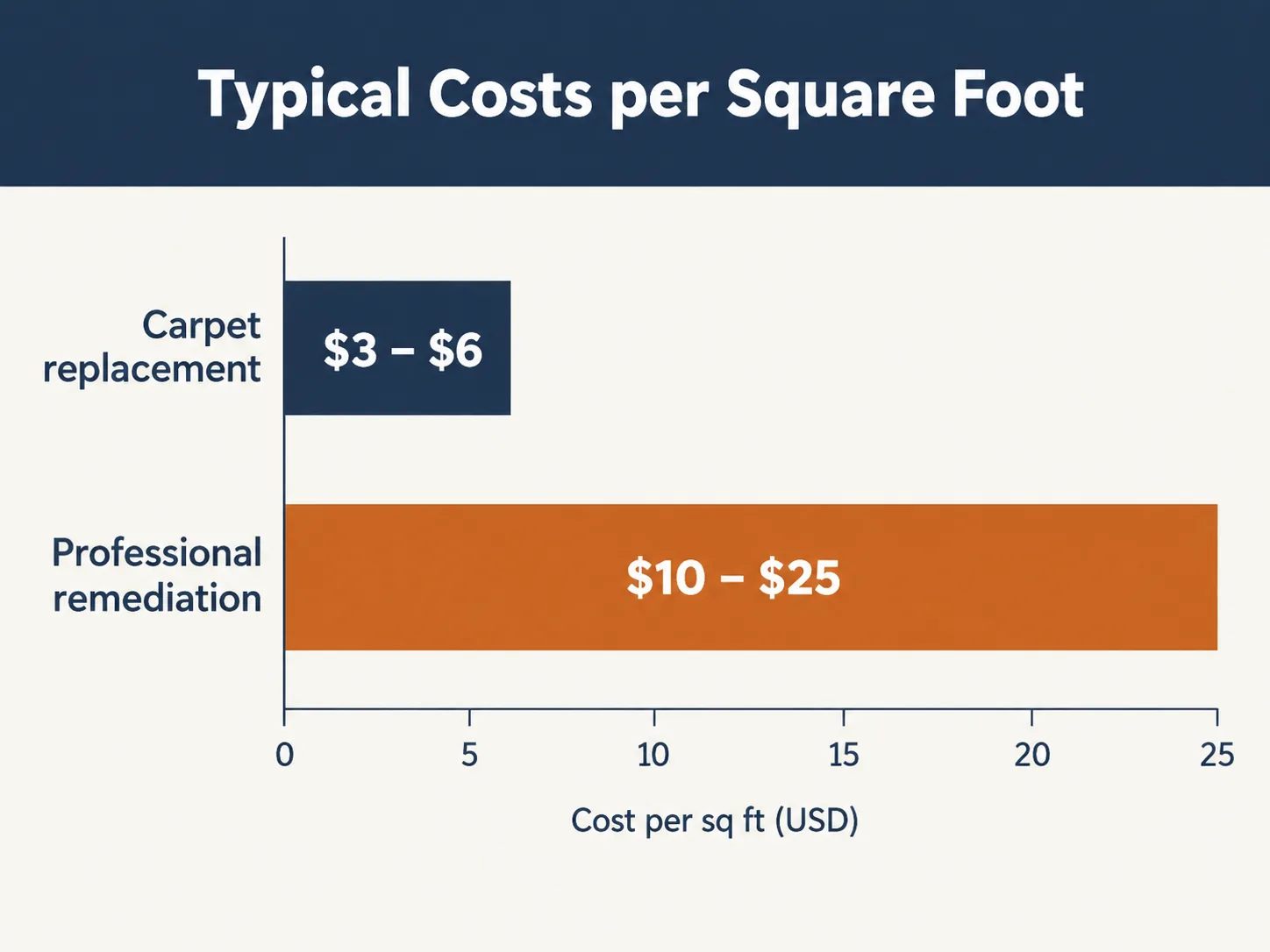
Replacement is the more common outcome, so the practical question is cost. Carpet replacement runs roughly $3–$6 per square foot installed, and padding adds $0.50–$1.50 per square foot installed.
| Item | Cost range | Source |
|---|---|---|
| Carpet replacement (installed) | $3–$6 / sq ft | dgfloors.com (2026) |
| Padding — material only | $0.20–$0.75 / sq ft | currentcost.org (2026) |
| Padding — installed (3/8" foam to 1/2" rebond) | $0.50–$1.50 / sq ft | designtransitionstudio.com (2026) |
| Professional mold remediation (for comparison) | $10–$25 / sq ft | restoreadvisor.com (2026) |
Two things stand out. First, replacing carpet is almost always cheaper than professional remediation on a per-square-foot basis — which is a big part of why "replace" is the default answer for moldy carpet. Second, the public cost figures genuinely conflict: national remediation averages are quoted as low as $2,200 and as high as $7,000 depending on the vendor. Any single number you see is a range, not a price list.
Real-world quotes from homeowners bear that out. One r/homeowners thread reported three companies quoting $7,000–$10,000 for remediation of two mold-damaged bedrooms alone — before any rebuild. Another reported a full remediation-plus-rebuild estimate of $20,000–$30,000. The remediation-only versus build-back gap is a frequent surprise, and it's exactly where carpet padding mold removal and subfloor mold treatment sit as separate line items in a quote.
6 Hidden Mold: Check the Pad and Subfloor
A carpet can look clean on top and still be moldy underneath. The EPA lists the underside of carpets and pads as a common hidden-mold location.
The pad is the real problem zone: it's a sponge that holds water long after the surface feels dry, and it's porous in exactly the way the EPA warns about. This is why a professional carpet mold inspection looks at the pad and subfloor, not just the fibers, and why the disposal step matters — moldy material should be bagged and removed rather than left to shed spores. When removal is the call, moldy carpet disposal is part of doing it safely.
Methodology
This guide was compiled on October 13, 2026 from primary government and industry sources plus 2026 cost aggregators. Every statistic maps to a named source; conflicting figures are presented as ranges rather than single numbers.
- Primary sources consulted: US EPA, IICRC S500, Carpet & Rug Institute
- Cost sources: 2026 aggregators (dgfloors.com, currentcost.org, designtransitionstudio.com, latestcost.com)
- Community signal: Reddit threads (r/HomeImprovement, r/CleaningTips, r/homeowners) for real-world quotes and FAQ questions
- Data range: 2024–2026; EPA guidance updated February 2026
- Last verified: October 13, 2026
- Update schedule: Reviewed quarterly as cost and guidance change
Frequently Asked Questions
Can mold be cleaned out of carpet, or does it always need replacing?
Usually replace. The EPA states porous materials like carpet may have to be thrown away when moldy because mold fills the crevices and is difficult or impossible to remove completely. Only small, surface-level spots from clean water, dried within 24–48 hours, are candidates for cleaning.
How fast does mold grow in wet carpet?
Mold can begin growing within 24–48 hours of materials becoming wet (EPA/FEMA). If carpet stayed wet longer than 48 hours, assume the pad and subfloor are already colonized even if the surface looks dry.
Can I clean carpet mold with bleach or vinegar?
The EPA does not recommend routine use of biocides like bleach. Dead mold can still cause allergic reactions, so mold must be physically removed, not just killed. Detergent and water with physical removal is the EPA method for hard surfaces; porous carpet generally can't be fully cleaned.
How much does it cost to replace moldy carpet?
Carpet replacement typically runs $3–$6 per square foot installed, and padding adds $0.50–$1.50 per square foot installed (or $0.20–$0.75 per square foot for material only). A typical 200-square-foot room would be roughly $700–$1,500 including padding.
When can I handle carpet mold myself vs. call a professional?
If the moldy area is under about 10 square feet and from clean water (IICRC Category 1), the EPA says a homeowner can usually DIY. Larger areas, sewage or contaminated water (Category 3), or HVAC involvement require a professional — and carpet mold testing can clarify what you're dealing with before you start.
Can mold hide under carpet that looks clean on top?
Yes. The EPA lists the underside of carpets and pads as a common hidden-mold location. If the area has been wet, lift and inspect the pad and subfloor before assuming it is clean.
Sources & References
- US Environmental Protection Agency. "A Brief Guide to Mold, Moisture and Your Home." https://www.epa.gov/mold/brief-guide-mold-moisture-and-your-home. Accessed October 13, 2026.
- IICRC. "S500: Standard for Professional Water Damage Restoration." https://iicrc.org/s500/. Accessed October 13, 2026.
- Carpet and Rug Institute. "Technical Bulletins and Papers." https://carpet-rug.org/resources/technical-bulletins-and-papers/. Accessed October 13, 2026.
- dgfloors.com. "Carpet Replacement Cost in 2026." https://dgfloors.com/carpet-replacement-cost/. Accessed October 13, 2026.
- currentcost.org. "Carpet Padding Cost Per Square Foot 2026." https://currentcost.org/carpet-padding-cost-per-square-foot-united-states/. Accessed October 13, 2026.
- designtransitionstudio.com. "Carpet Padding Cost Per Square Foot 2026." https://designtransitionstudio.com/carpet-padding-cost-per-square-foot-clear-price-ranges-home/. Accessed October 13, 2026.
- restoreadvisor.com. "Mold Remediation Cost 2026." https://www.restoreadvisor.com/mold-remediation/cost. Accessed October 13, 2026.
Last updated: October 13, 2026