

Carpet Mold Remediation
A full process that pairs mold removal with moisture correction so growth does not return.
Learn about carpet mold remediation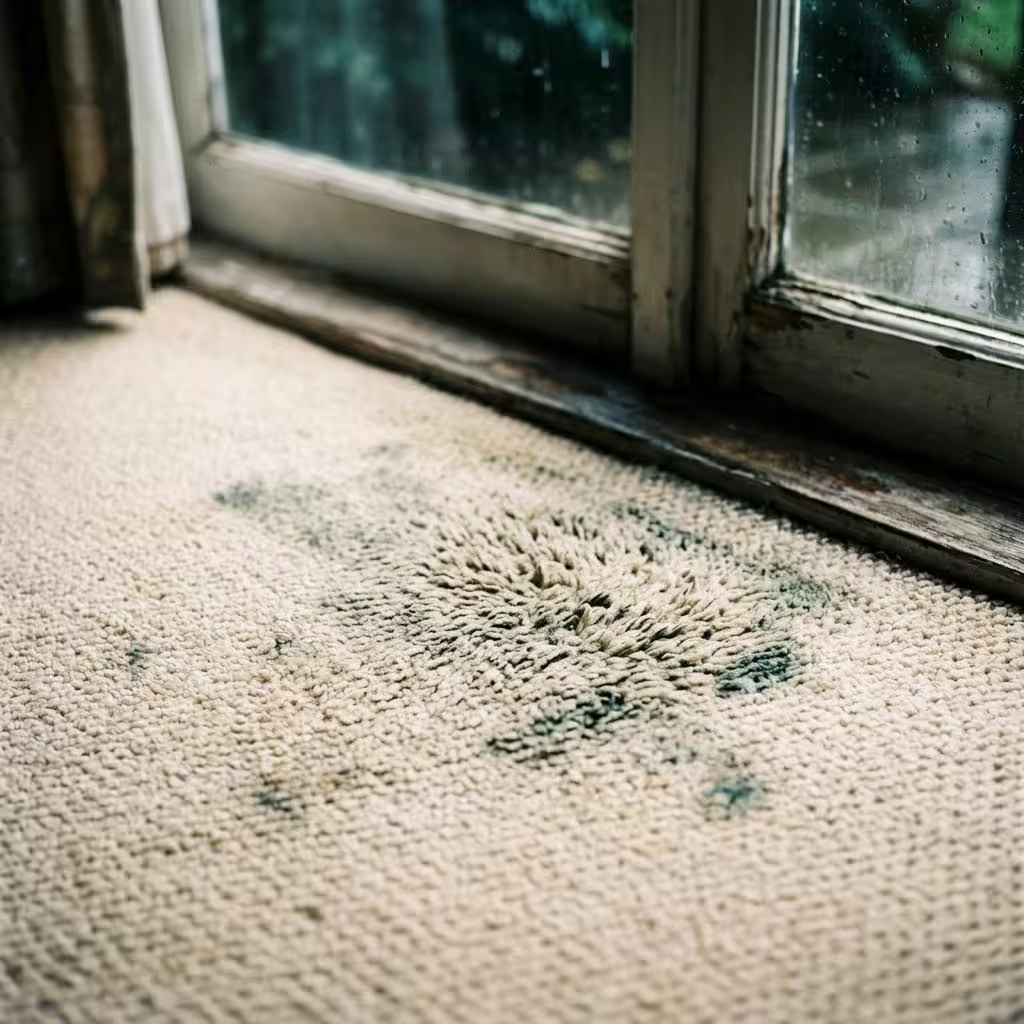
Carpet mold service
Antimicrobial carpet treatment is the use of an appropriate product for a specified purpose and material. It should be considered within a broader assessment of the carpet, water source, and cleanup needs. Spraying a product is not the same as removing mold, and it does not resolve contamination hidden in the padding or subfloor.
EPA guidance does not recommend biocides as a routine practice during mold cleanup. Professional judgment may identify situations for their use, but treatment should not be a default replacement for physical removal and moisture correction.
Product instructions matter. A product intended for hard surfaces may not be suitable for carpet or padding. Application, ventilation, contact time, and access restrictions must follow the actual label rather than a generic promise that a room has been sanitized.
Share the water history, affected layers, and any products already used. Do not mix cleaning chemicals.
A proposed product must have a relevant labeled use and fit the overall cleanup plan.
Unsuitable porous layers are not retained solely because a chemical treatment has been proposed.
Application, ventilation, drying, and return to the room follow the selected product instructions and work plan.
EPA explains that dead mold can still cause allergic reactions in some people. Physical removal of contamination and correction of moisture remain important. A treatment cannot be described as a universal substitute for those steps.
An antimicrobial label does not make carpet immune to future leaks or damp conditions. Ask what the product is intended to do, which material it can be used on, and how the moisture problem will be addressed separately.
These resources explain the general principles and limitations discussed here. The scope for your property depends on its actual conditions.
Call (855) 661 4275 to describe your situation and confirm service availability for your location. Ask what is included before deciding on the next step.
Monday to Saturday, 8am to 7pm
Carpet mold situations often overlap. These services are closely connected to antimicrobial carpet treatment, and each has its own page with details specific to that problem. You can also return to the full list of carpet mold removal services.
A full process that pairs mold removal with moisture correction so growth does not return.
Learn about carpet mold remediation
Cleaning options that limit added moisture when the carpet is suitable to retain, not a shortcut around remediation.
Learn about low-moisture carpet treatment
Addressing the surface beneath carpet so new flooring goes down on a sound, dry base.
Learn about subfloor mold treatment